-
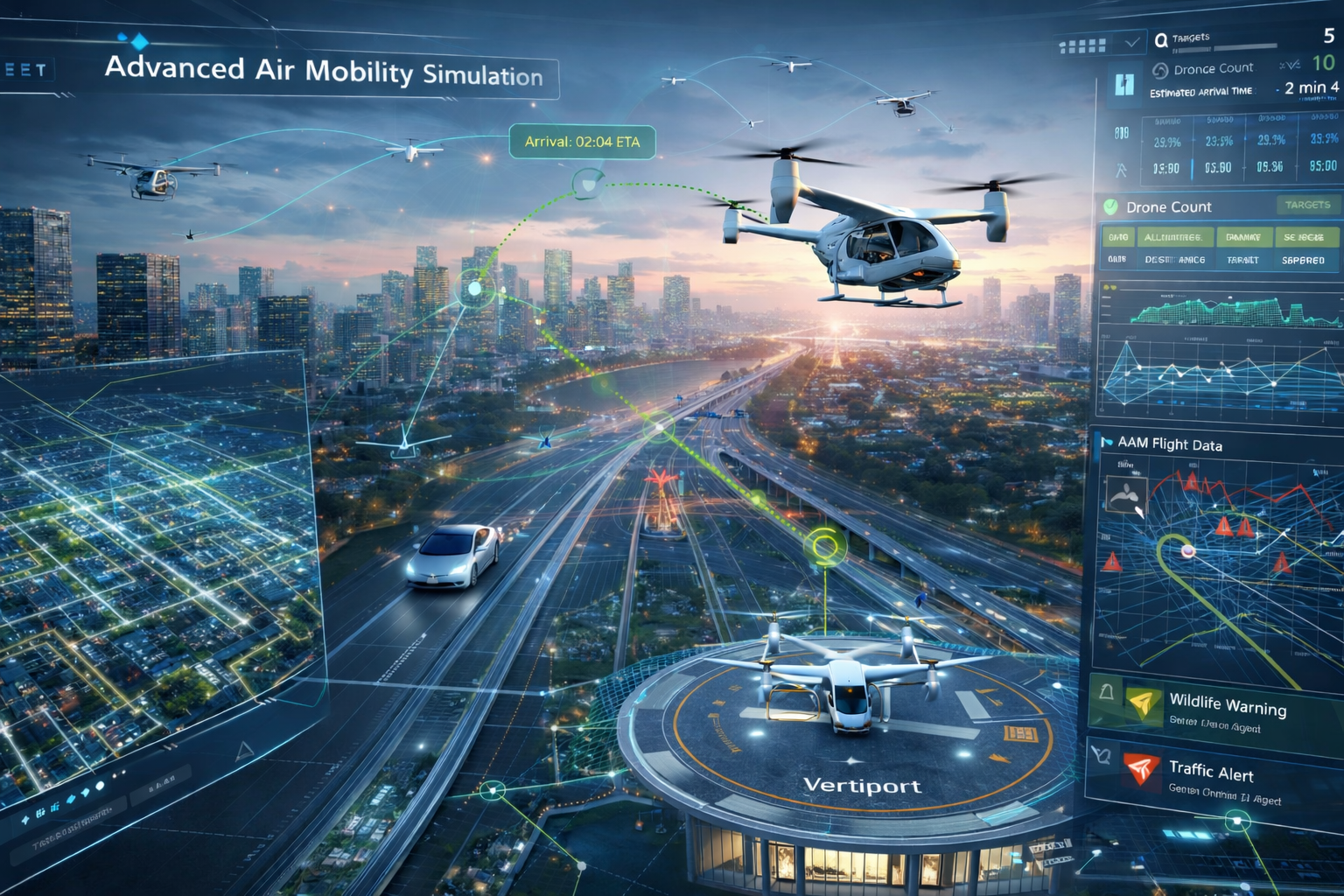
Digital Twin and MicroSimulation of AAM Operations
A digital twin of AAM operations is a high-fidelity virtual replica of the airspace, infrastructure, and vehicles that integrates real-time and historical data to monitor, predict, and optimize system performance. Microsimulation models individual agents—such as eVTOLs, passengers, and vertiport processes—at fine temporal and spatial scales to capture detailed interactions, operational dynamics, and emergent system behavior.
-
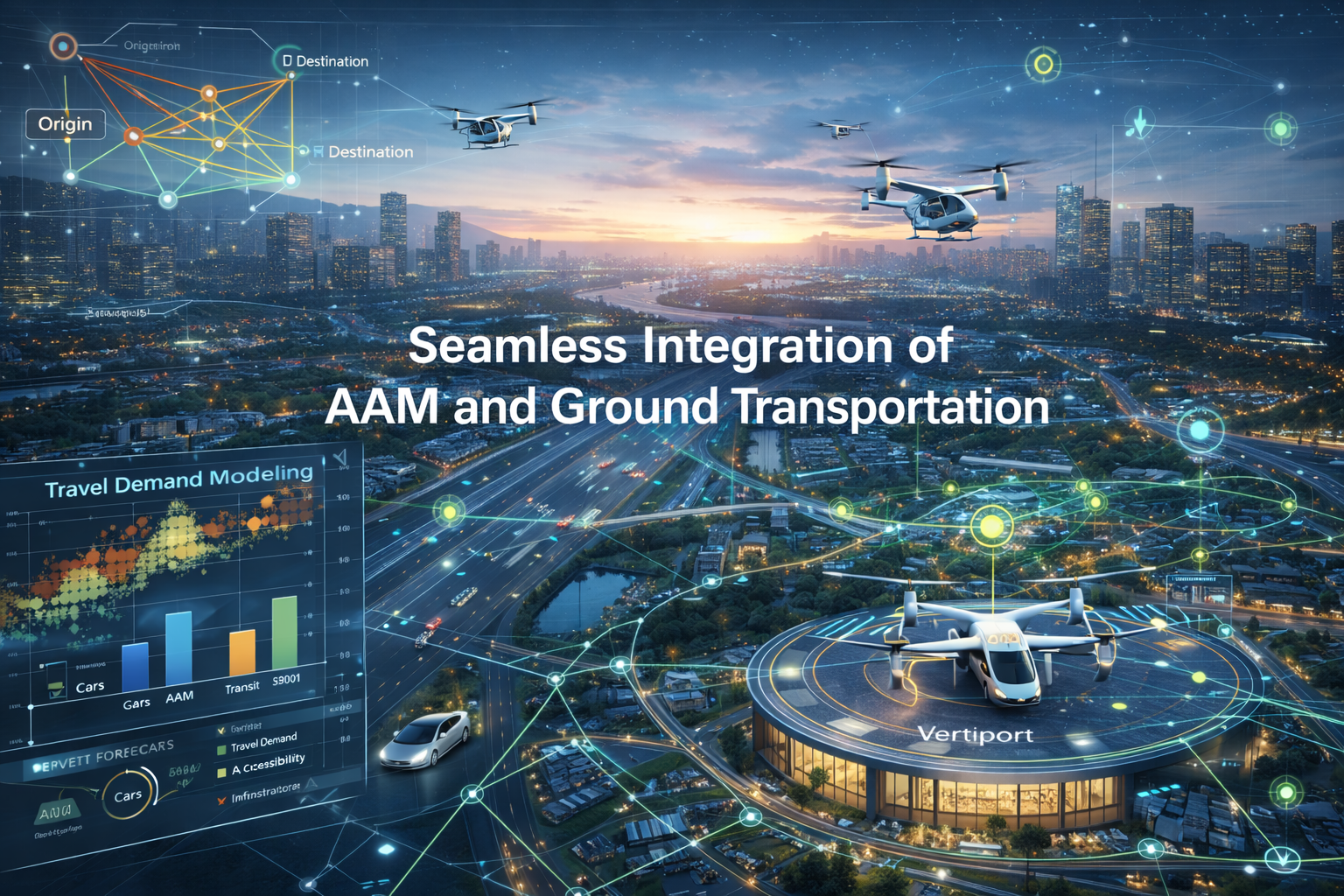
Integrated AAM–Ground Transportation Planning
AAM is expected to integrate seamlessly with ground transportation systems to realize its full potential as part of a multimodal network. This requires data-driven travel demand modeling to identify where AAM adds the most value, combined with strategic vertiport siting that ensures strong connectivity with existing transportation infrastructure.
-
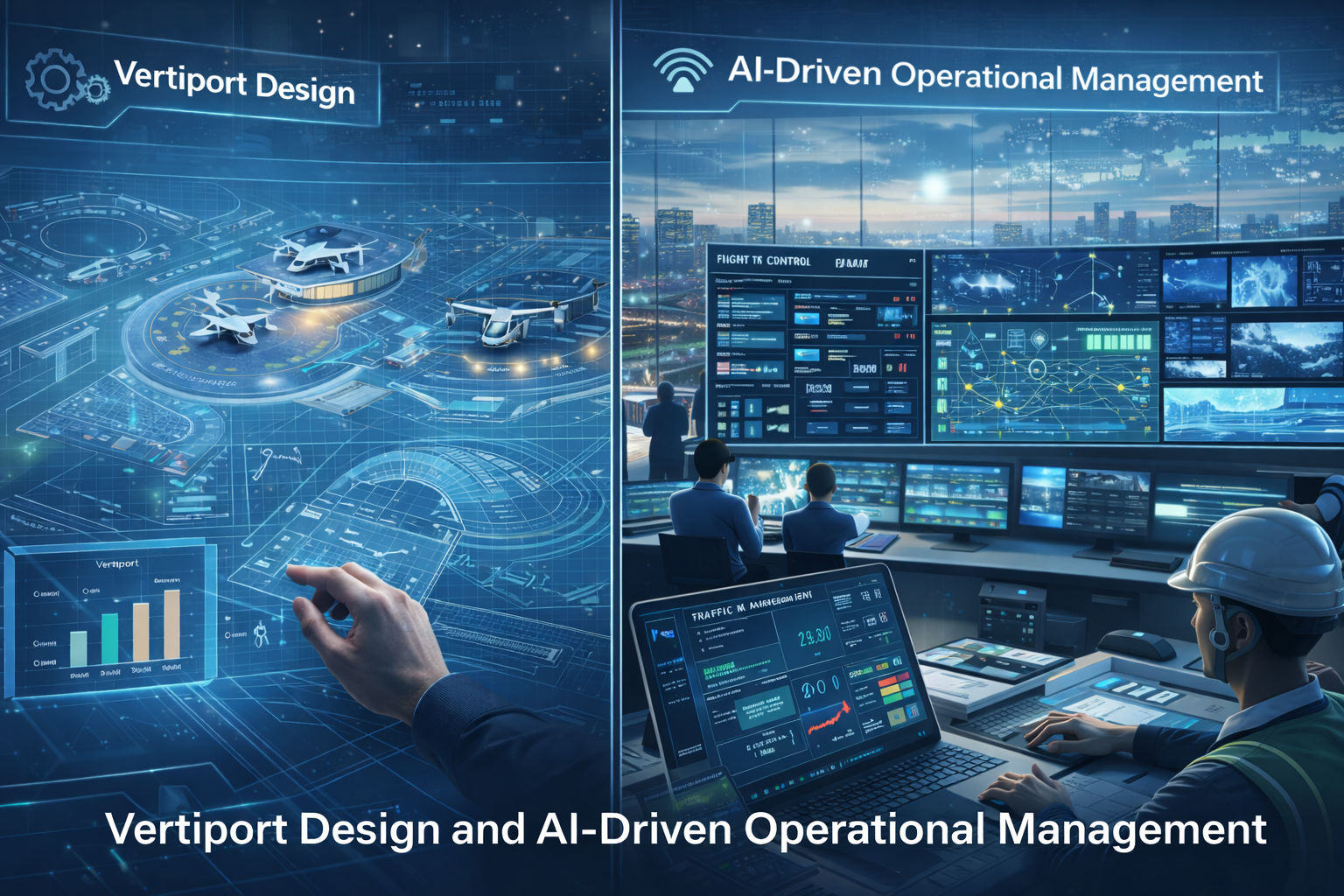
Innovative Vertiport Design and AI-Driven Operational Management
Innovative vertiport design leverages data-driven planning to optimize layout, capacity, and connectivity with surrounding ground transportation, ensuring efficient passenger flow and minimal operational delays. AI-driven operational management enables real-time scheduling, fleet coordination, and demand-responsive decision-making by integrating data from airspace, vertiport operations, and ground networks. Together, they create a scalable and resilient AAM ecosystem that enhances safety, efficiency, and user experience.
-
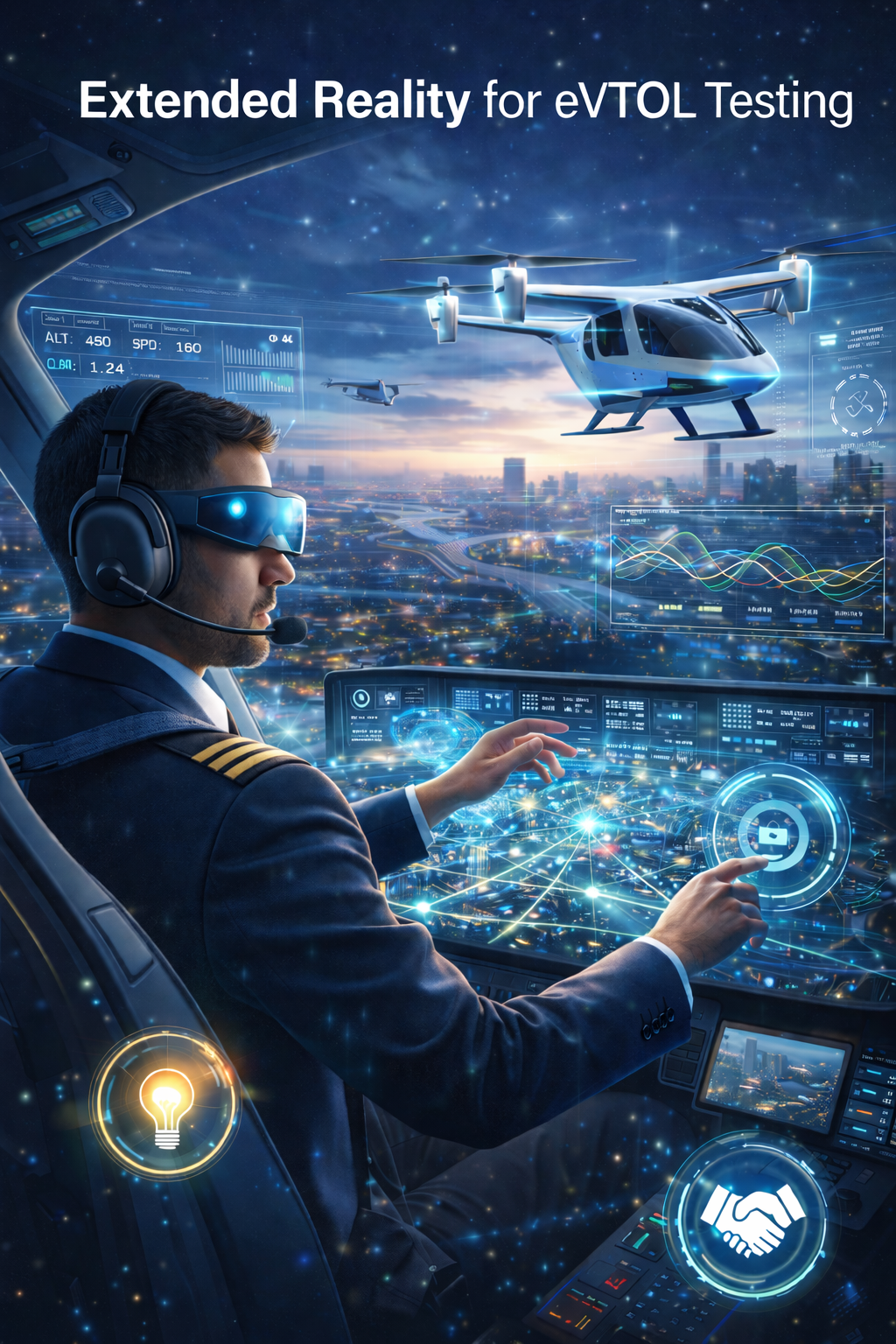
Extended Reality for eVTOL Testing
Extended reality (XR) enables immersive testing of eVTOL systems by placing pilots in realistic, data-rich virtual environments that replicate complex operational scenarios. By integrating real-time flight dynamics, airspace conditions, and system feedback, XR allows safe, cost-effective evaluation of vehicle performance and pilot interaction without physical flight. This approach accelerates design validation, enhances training, and supports robust certification processes.